Finley Bauer · 9 September 2026
Lunar Calendars Continue to Dictate Timing of Traditional Markets in Southern Italy
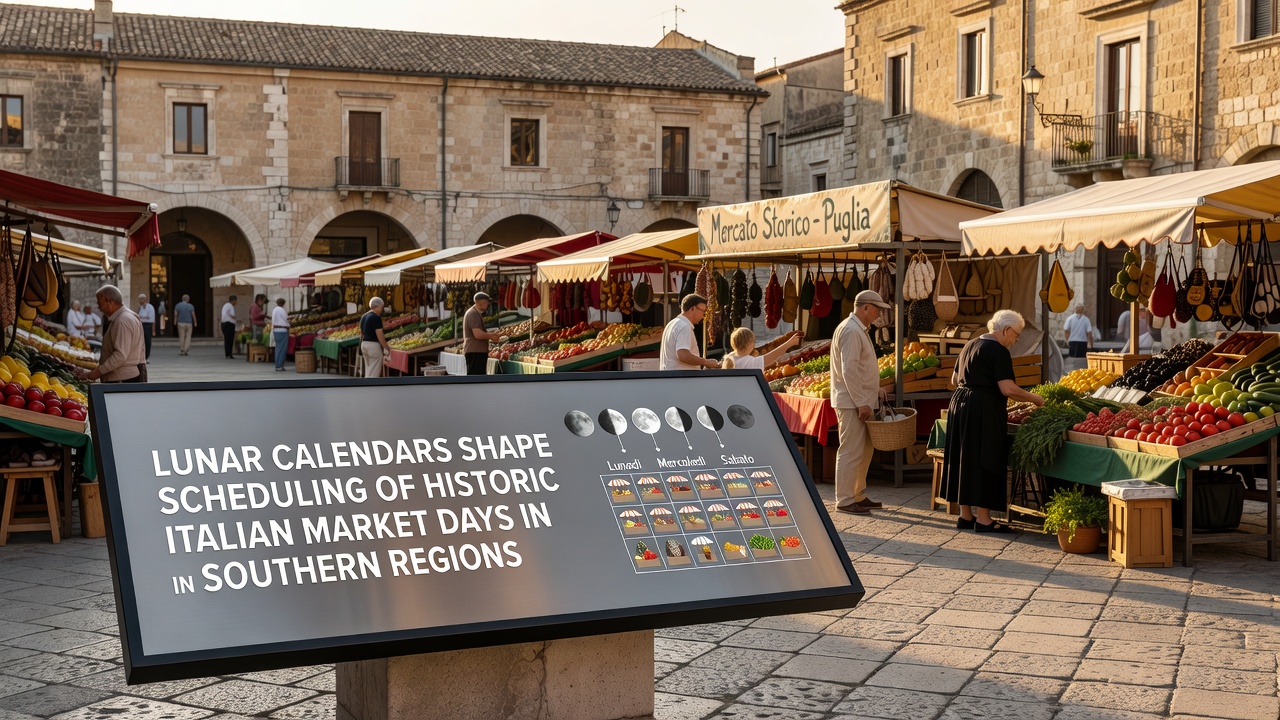
Traditional market schedules across southern Italy have long followed lunar cycles rather than fixed weekdays, and communities in regions like Puglia, Calabria, and Sicily maintain these patterns because agricultural activities align with moon phases for planting, harvesting, and preservation. Historians trace the practice to ancient Roman and pre-Roman customs where farmers observed the moon to determine optimal times for trade, and these rhythms persist in weekly or biweekly gatherings that draw both locals and visitors.
Historical Roots of Lunar Scheduling
Evidence from medieval records shows that market days in towns such as Bari and Lecce shifted according to new and full moons, which allowed traders to coordinate with seasonal changes in daylight and tides along the Adriatic and Ionian coasts. Researchers at the University of Bari have documented ledgers from the 14th century that list market openings on the first Sunday after a full moon, and similar patterns appear in Sicilian archives where fishermen adjusted sales around lunar tides that affected catches. This system avoided conflicts with religious festivals while maximizing attendance when roads remained passable and produce stayed fresh without modern refrigeration.
Regional Variations in Practice
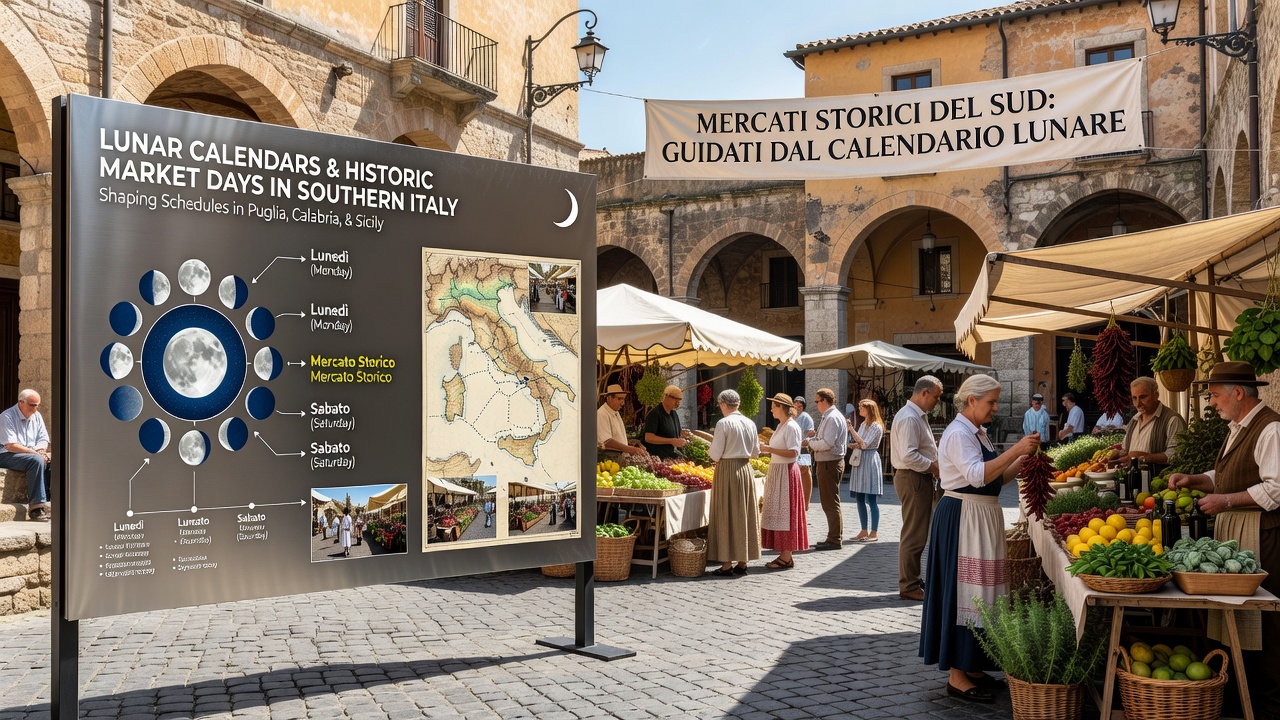
In Calabria, markets near Cosenza open on the evening of the waxing crescent, giving growers time to harvest under favorable conditions, whereas Sicilian gatherings in Agrigento often coincide with the waning gibbous phase to align with lower tides that ease transport of goods from coastal areas. Data collected by regional agricultural offices indicates that over 60 percent of historic markets in these southern provinces still publish dates using lunar references in their annual calendars, and local authorities publish adjustments each year to account for the 29.5-day synodic cycle. One study from an Australian university on Mediterranean agricultural traditions notes that these alignments reduce spoilage rates because vendors bring goods at peak ripeness rather than storing them for fixed calendar dates.
Observers note that the practice extends beyond produce to include livestock and craft sales, with full-moon markets often featuring extended hours into the night when cooler temperatures keep dairy and meat viable longer. Communities coordinate these events through printed almanacs that combine lunar data with saint days, creating hybrid schedules that satisfy both tradition and contemporary needs.
Modern Adaptations and Economic Impact
Local governments have integrated lunar scheduling into tourism promotions, and figures from the Italian Ministry of Agriculture show increased visitor numbers during moon-aligned events compared with standard weekdays. In September 2026 the full moon falls on the 17th, which means several markets in Puglia will extend operations through the following weekend to accommodate both farmers and tourists arriving for harvest festivals. Traders report higher sales volumes during these periods because the timing coincides with peak olive and grape seasons, and supply chains benefit from predictable cycles that allow advance planning without reliance on arbitrary dates.
Digital tools now supplement traditional almanacs, yet many vendors continue to consult printed lunar calendars passed down through families, and apps developed by regional cooperatives display phase data alongside weather forecasts. This blend preserves cultural continuity while meeting regulatory requirements for health inspections and vendor permits that follow the Gregorian calendar.
Challenges and Preservation Efforts
Urban expansion and changing work patterns have pressured some markets to adopt fixed days, yet communities in smaller towns resist these shifts because lunar timing remains tied to soil moisture levels and animal behavior that affect product quality. A report from the European Institute of Cultural Heritage highlights ongoing projects that record oral histories from market elders to maintain accurate lunar references, and these archives help younger generations understand the original rationale behind each phase. Without such documentation, the connection between celestial observations and daily commerce risks fading as digital scheduling dominates.
Conclusion
Lunar calendars therefore remain embedded in the operational fabric of southern Italian markets, where they continue to influence attendance, product freshness, and community rhythms in measurable ways. Data from agricultural records and academic studies demonstrates that these ancient alignments deliver practical benefits that fixed schedules have not fully replaced, and events scheduled for 2026 illustrate how the system adapts without losing its core logic. Regional authorities and cultural organizations work to document and support the tradition, ensuring that future generations encounter markets timed to the same celestial cues that guided their predecessors.