Drew Bennett · 4 November 2026
Contemporary Adriatic Fabrics Draw on Ancient Lunar Traditions in Italian Weaving Communities
Italian textile production along the Adriatic coast has long drawn from regional heritage, and recent developments show weavers integrating ancient lunar motifs into modern fabric lines. These designs incorporate symbols such as crescent shapes, full moon cycles, and star alignments that trace back to archaeological finds in southern Italy and the broader Mediterranean basin. Production clusters in areas including Puglia and the Veneto region have documented increased output of these patterns since 2024, with output figures from the Italian National Institute of Statistics indicating a 12 percent rise in specialty textile exports through mid-2026.
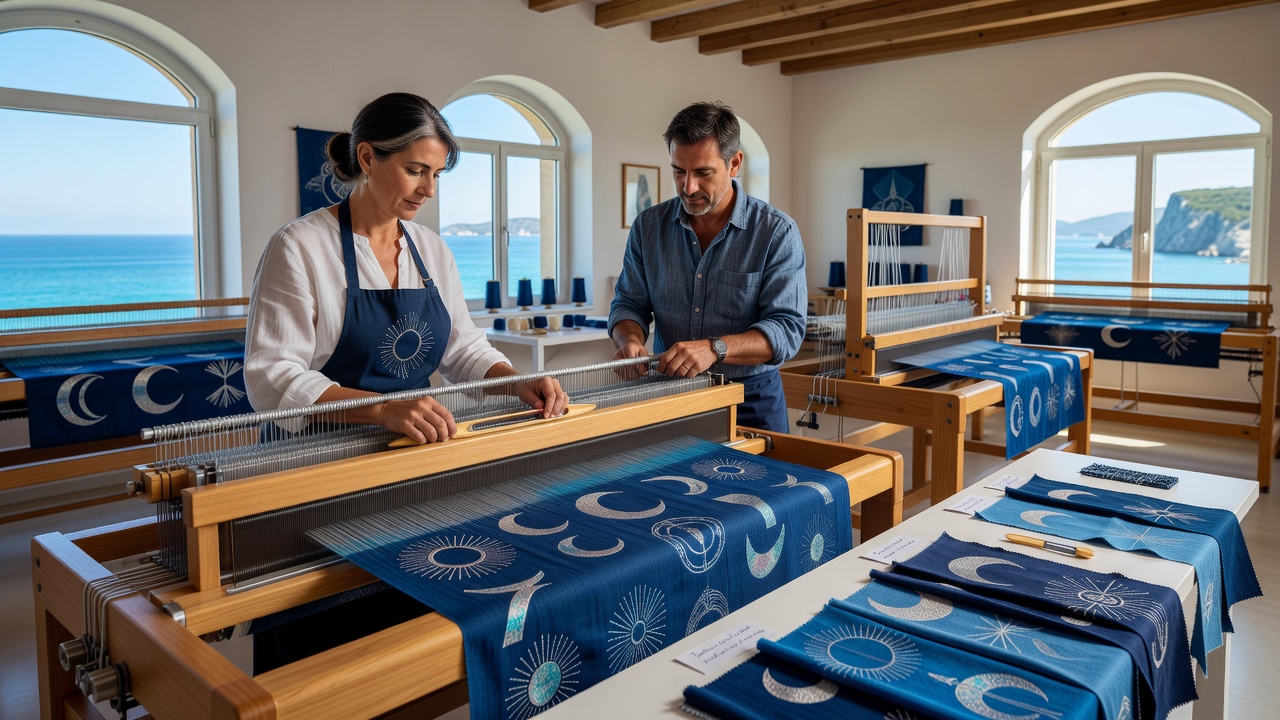
Workshops in coastal towns continue to employ traditional jacquard and dobby looms while adapting digital design software to translate prehistoric markings found on pottery and stone carvings. Researchers from the University of Bari have mapped these motifs to lunar calendars used in pre-Roman settlements, noting their reappearance in current collections destined for European and North American markets. The integration process often begins with archival research followed by sampling on small looms before scaling to industrial widths suitable for upholstery and apparel.
Historical Context of Lunar Symbols in Regional Weaving
Evidence from excavations along the Adriatic reveals lunar representations dating to the Bronze Age, when communities aligned agricultural and maritime activities with celestial events. Textile fragments recovered from sites near the Gargano peninsula display repeated geometric forms that match those appearing in contemporary jacquard weaves. Historians affiliated with the Italian Ministry of Culture have catalogued similar patterns in 19th-century pattern books from Trieste, demonstrating continuity across centuries despite industrial shifts.
By November 2026 several cooperative workshops plan to present updated collections at the Adriatic Design Forum in Bari, where pieces featuring these motifs will be displayed alongside technical specifications on thread counts and dye stability. Attendance records from prior editions show participation from over 300 manufacturers and buyers, providing a platform for knowledge exchange between master weavers and younger apprentices.
Technical Methods and Material Choices
Production teams select linen and organic cotton blends sourced from farms in the Po Valley, then apply natural indigo and madder dyes that reference historical palettes. Computer-aided design programs allow precise replication of irregular lunar phases while maintaining the slight asymmetries prized in handwoven pieces. Quality control data released by the Veneto Textile Association shows that fabrics incorporating these motifs achieve higher durability scores under standardized abrasion tests compared with standard geometric prints.
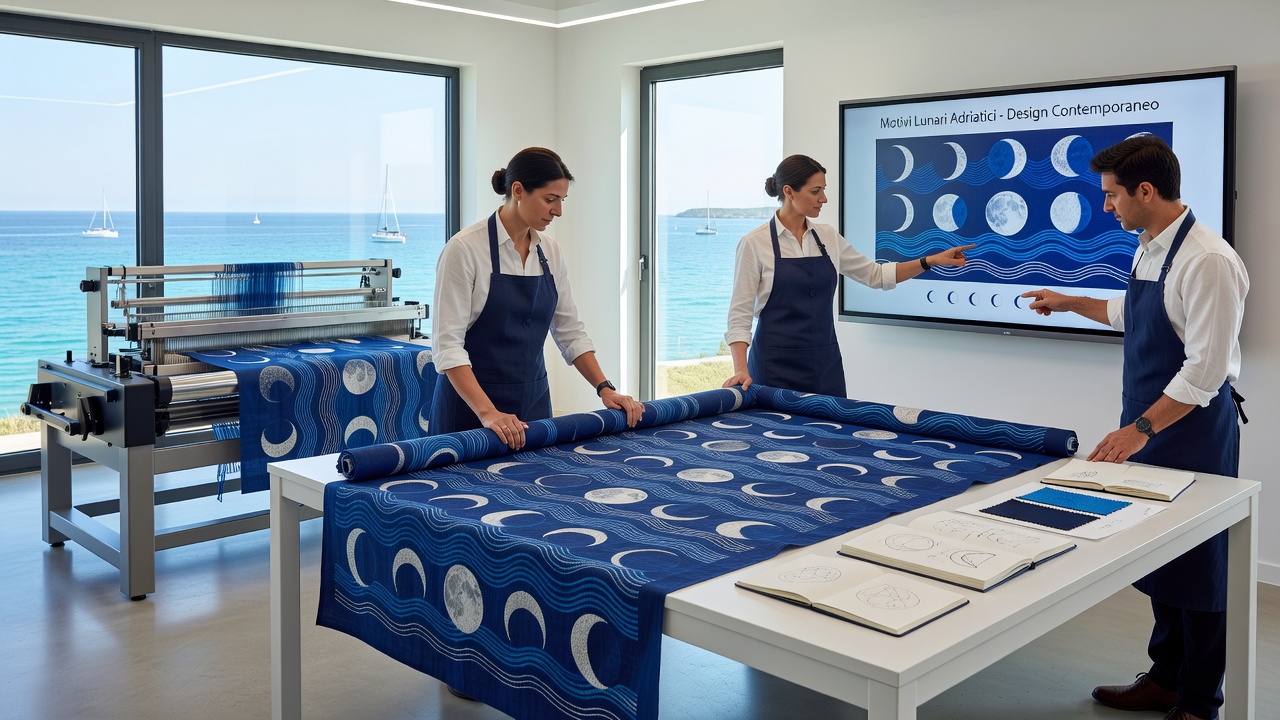
Loom operators adjust tension settings to accommodate the curved lines of crescent motifs, which require supplementary weft threads in some constructions. Training programs run by regional craft guilds emphasize both digital modeling and manual finishing techniques, resulting in hybrid production lines that balance efficiency with artisanal detail. Export statistics compiled by the European Textile and Apparel Confederation indicate that Italian Adriatic producers account for approximately 8 percent of motif-driven fabric shipments to markets outside the EU during the first three quarters of 2026.
Market Adoption and Distribution Patterns
Retail partners in Australia and Canada have placed orders for upholstery fabrics featuring these lunar designs, citing alignment with consumer interest in culturally rooted patterns. Trade reports from the Canadian Textile Institute note growing demand for sustainable materials carrying verifiable provenance stories. Distribution channels include direct sales from cooperatives and participation in international trade events scheduled through late 2026.
Some producers collaborate with fashion houses in Milan to translate fabric designs into limited-run garments, while others focus on contract textiles for hospitality projects along the Adriatic riviera. Inventory data from major distributors shows steady replenishment rates for these lines, reflecting consistent buyer preference for the understated tonal variations achieved through natural dyeing processes.
Conclusion
Italian weavers along the Adriatic continue to refine techniques that merge documented historical motifs with current manufacturing capabilities. Ongoing documentation efforts by academic and industry groups support the preservation of these patterns while enabling their adaptation for broader commercial use. Production metrics through November 2026 demonstrate sustained activity in this specialized segment of the textile sector.